Handpiece Management in the Dental Clinic: Maintenance, Backup Planning and Reducing Downtime
Handpiece Management in the Dental Clinic: Maintenance, Backup Planning and Reducing Downtime
Dental handpieces are among the most frequently used pieces of equipment in a dental practice. From routine restorative procedures to more specialised treatments, reliable handpieces are essential to maintaining an efficient clinical workflow.
However, effective handpiece management involves more than simply purchasing good-quality equipment. Practices also need to consider whether they have enough handpieces available, what happens when one requires an unexpected repair, how drive motors are managed, and whether staff are following consistent maintenance procedures.
A well-planned approach can help reduce unexpected breakdowns, minimise disruption to appointments, extend equipment lifespan and control long-term repair and replacement costs.
In this guide, MF Dental looks at the key areas dental clinics should consider when managing their handpieces.
1. Does Your Practice Have Enough Handpieces?
One of the most common challenges in a dental clinic is having insufficient handpieces available for the number of surgeries, clinicians and procedures taking place throughout the day.
When a practice has only the minimum number of handpieces required to operate, even a relatively minor equipment problem can create difficulties. A handpiece may need to be removed from service for maintenance, become damaged during use or require an unexpected repair.
If there is no suitable replacement available, the practice may have to reorganise appointments, move equipment between surgeries or delay treatment.
Clinics should assess their handpiece requirements based on factors such as:
The number of surgeries operating simultaneously.
The number of dentists and hygienists using handpieces.
The types of procedures carried out.
The frequency of use throughout the working day.
The time required for cleaning, maintenance and sterilisation.
The availability of backup equipment when a handpiece is out of service.
There is no single number of handpieces that will suit every practice. A small clinic operating one surgery will have different requirements from a busy practice with several clinicians working simultaneously.
The important question is whether the practice can continue operating efficiently when one or more handpieces are temporarily unavailable.
Build a suitable reserve of handpieces
Maintaining a small reserve of commonly used handpieces can provide valuable flexibility.
Rather than purchasing equipment only after something fails, clinics should consider their normal workload and the potential consequences of an unexpected breakdown.
Having a suitable spare available allows the clinician to continue working while the faulty handpiece is assessed or repaired.
This can be particularly important in busy practices where equipment downtime may affect several appointments and place additional pressure on both clinical and administrative staff.
MF Dental supplies a wide range of dental handpieces and equipment for practices looking to add to or update their existing equipment.
2. Planning for Unexpected Handpiece Repairs
Even with good maintenance, dental handpieces are mechanical devices and components will experience wear over time.
Turbines, bearings, chucks, seals and other internal parts may eventually require attention. The problem is not necessarily that a handpiece develops a fault, but rather what happens when the practice has no clear procedure for dealing with it.
Consider a high-speed handpiece developing a bearing problem early in the working day. If no suitable spare is available, the team may need to move equipment between surgeries, change the appointment schedule or arrange an urgent replacement.
These interruptions can be costly in terms of staff time, patient inconvenience and lost clinical capacity.
Establish a clear repair procedure
Every practice should have a straightforward process for dealing with faulty handpieces.
This should include:
Removing equipment from service when its performance or safety is in doubt.
Recording the handpiece make, model and nature of the problem.
Identifying whether a suitable replacement is available.
Arranging assessment or repair promptly.
Tracking equipment sent away for repair.
Reviewing recurring faults to identify possible maintenance or handling issues.
Handpieces showing unusual noise, vibration, reduced power, overheating or problems retaining burs should not simply remain in service until they fail completely.
These symptoms warrant assessment in accordance with the manufacturer’s guidance. Early attention may help prevent further damage, although the outcome will depend on the underlying fault.
A reliable repair provider can also help a clinic decide whether repairing an older handpiece remains economical or whether replacement would be a better long-term option.
Drive motors deserve particular attention when planning equipment availability.
In practices using electric motor systems, a motor failure can potentially affect several contra-angle or straight handpiece attachments that rely on the same drive system.
This means losing one motor may have a greater impact on the clinic than losing a single handpiece.
Consider a backup motor
Where an electric motor is essential to the clinic’s daily workload, maintaining a compatible spare may be a sensible investment.
If the main motor becomes unavailable, a backup may allow treatment to continue while the original unit is assessed or repaired.
When selecting backup equipment, the practice should confirm compatibility with its existing system, including:
Motor connection.
Control system.
Speed requirements.
Handpiece compatibility.
Intended clinical applications.
Could an air motor provide a backup?
For some practices, a compatible air-driven motor may offer an alternative if an electric motor becomes unavailable. However, this should not be assumed to be a universal solution.
Before relying on an air motor as backup equipment, the clinic should confirm that it is suitable for the relevant handpiece attachments, connection system, operating requirements and procedures.
The most effective approach is to identify critical equipment in advance and establish a practical contingency plan with the equipment supplier or service provider.
A relatively small investment in backup equipment may help prevent a considerably greater disruption when a failure occurs.
4. Make Handpiece Maintenance Part of the Daily Routine
Correct maintenance remains one of the most important parts of handpiece management.
Dental handpieces operate at high speeds and are repeatedly exposed to clinical debris, cleaning procedures and sterilisation cycles. Without appropriate care, internal components can experience premature wear even when the handpiece itself is of good quality.
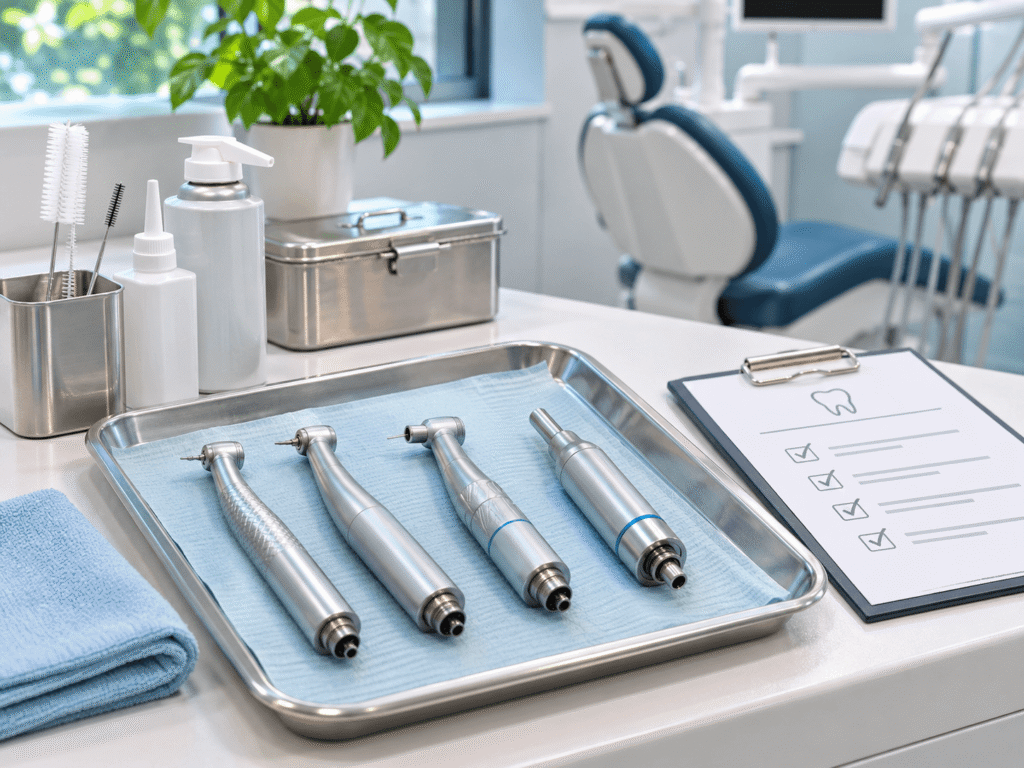
Cleaning, lubrication and processing procedures should therefore be treated as routine responsibilities rather than tasks carried out only when a problem develops.
Staff should always follow the manufacturer’s instructions for each individual handpiece. Requirements can differ between models, particularly in relation to lubrication, cleaning, maintenance adaptors and the correct stage at which maintenance should be carried out.
The clinic should also ensure that the correct lubricants, adaptors and other handpiece maintenance products are readily available to staff.
For more detailed practical guidance on cleaning, lubrication, sterilisation and routine care, see our Handpiece Maintenance Tips.
5. Pay Attention to the Turbine and Chuck
The turbine and chuck mechanism are precision components that can be affected by contamination, incorrect maintenance and normal wear.
During clinical use, debris may accumulate around the handpiece head or chuck. If this is not dealt with in accordance with the manufacturer’s instructions, it may contribute to poor bur retention, reduced performance or internal wear.
Push-button chucks in particular must retain burs securely. Any change in the way a bur is held, inserted or released should be investigated rather than ignored.
Practices should also avoid cleaning methods that are not approved by the manufacturer. Handpieces should not be submerged in cleaning solutions or placed in an ultrasonic bath unless the manufacturer specifically permits it.
Correct maintenance procedures vary between models, so staff should always refer to the instructions supplied for the equipment in use.
6. Staff Training: Consistency Matters
Even the best maintenance procedure has limited value if it is not followed consistently.
In a busy dental clinic, responsibility for cleaning, lubrication and sterilisation may be shared between several members of the team. Different staff members may also have different levels of experience with particular handpiece models or maintenance systems.
This makes staff training an important part of handpiece management.
Everyone involved in handpiece processing should understand the clinic’s procedures and know where to find the manufacturer’s instructions.
Training should cover:
Correct cleaning and lubrication procedures for each handpiece type.
The correct lubricant and adaptor for each model.
When lubrication should take place within the processing cycle.
Correct purging of excess lubricant where required.
Approved cleaning and sterilisation procedures.
Safe handling and storage.
Routine checks for damage, unusual noise or changes in performance.
How to report faults and remove defective equipment from service.
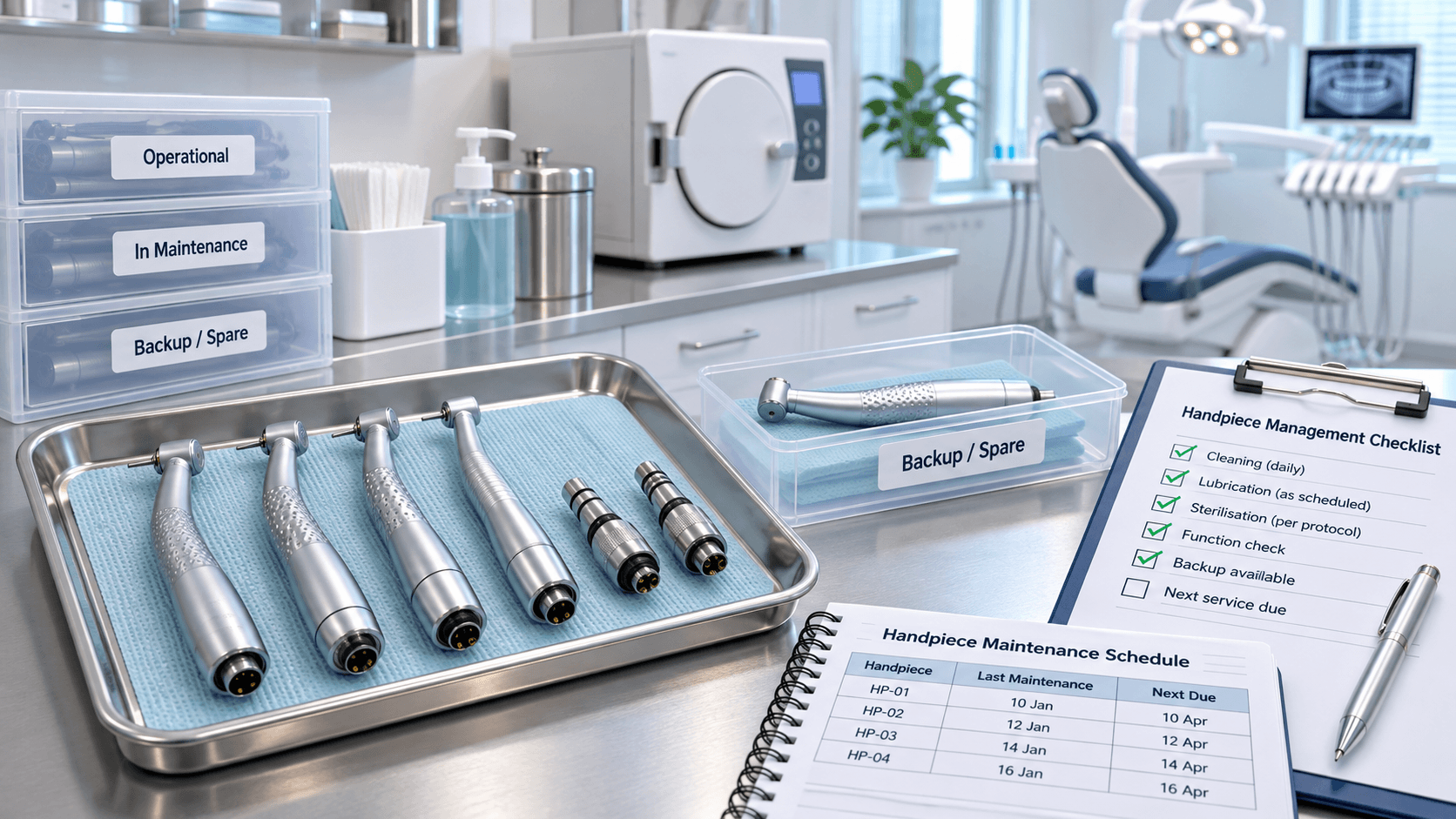
A simple written maintenance checklist can help make these procedures more consistent.
It can also be particularly useful when new staff join the practice or when a clinic introduces a different handpiece model.
The aim should be to make correct maintenance part of the normal working routine rather than relying on individual memory or experience.
7. Don’t Overlook the Dental Unit and Air Supply
A handpiece problem is not always caused by the handpiece itself.
Performance can also be affected by the equipment supplying air and water. Restricted air flow, blocked filters, incorrect operating pressure, problems with water delivery or worn connections may all affect handpiece operation.
Relevant dental unit checks should therefore form part of the clinic’s wider equipment maintenance programme.
Practices should consider:
Checking air and water filters at recommended intervals.
Confirming operating pressure is within the handpiece manufacturer’s specified range.
Checking for restricted air or water flow.
Ensuring couplings and connections remain in good condition.
Maintaining the dental unit and compressor according to the relevant service requirements.
Operating a handpiece at incorrect pressure may affect performance and potentially contribute to damage.
Checking the wider system can sometimes identify a problem before a handpiece is unnecessarily sent for repair.
8. Professional Servicing and Preventative Maintenance
Daily maintenance is essential, but it does not remove the need for professional servicing.
Internal components wear over time, and some developing problems may not be obvious during routine cleaning and lubrication.
Professional inspection can help assess the condition and performance of a handpiece and determine whether components require attention.
As a general guide, handpieces may require professional servicing every 6–12 months depending on usage, model and manufacturer recommendations. Heavily used handpieces may require attention more frequently.
Practices may also benefit from maintaining a simple equipment register recording:
Handpiece make and model.
Date of purchase or introduction into service.
Date of the last repair or service.
Previous faults or repairs.
Next planned inspection or servicing date where applicable.
Maintaining these records can make it easier to identify handpieces that repeatedly develop faults and help the practice make better decisions about repair, replacement and future purchasing.
9. The Financial Benefits of Better Handpiece Management
The purchase price of a handpiece is only one part of its lifetime cost.
Repairs, replacement equipment, staff time, clinical disruption and unexpected downtime can all contribute to the true cost of ownership.
A structured handpiece management programme can help protect the clinic’s investment.
Fewer avoidable breakdowns
Correct maintenance helps protect internal components from unnecessary wear and contamination.
Longer equipment life
Looking after turbines, bearings and chuck mechanisms may help delay the need for major repairs or replacement.
Better repair decisions
A record of previous faults and servicing can help the clinic decide whether continuing to repair a particular handpiece remains economical.
Less disruption
Suitable backup equipment allows the practice to continue operating when a handpiece or motor requires attention.
More consistent working practices
Staff training and written procedures reduce the risk of inconsistent handling and maintenance.
No maintenance programme can eliminate every equipment failure. However, a planned approach is generally preferable to waiting for equipment to break down before taking action.
10. A Practical Handpiece Management Checklist
Dental practices can use the following checklist to review their current arrangements:
Are there enough handpieces for the clinic’s normal daily workload?
Is suitable backup equipment available when a handpiece needs repair?
Does the practice have a contingency plan for electric motor failure?
Are compatible spare motors or alternative drive options available where appropriate?
Are staff trained in the correct maintenance procedures for each model?
Are the correct lubricants and adaptors readily available?
Is cleaning, lubrication and sterilisation carried out according to the manufacturer’s instructions?
Are handpieces checked for changes in noise, vibration, power or bur retention?
Are dental unit air pressure, filters and water delivery checked as recommended?
Are repairs and servicing recorded?
Is there a clear process for removing faulty equipment from service and arranging repairs promptly?
Reviewing these questions can help identify gaps in equipment availability, maintenance practices and staff training before they become more significant problems.
A Proactive Approach to Handpiece Management
Effective handpiece management involves much more than simply buying reliable equipment.
Dental clinics need to ensure that enough handpieces are available for their workload, suitable backups are in place, staff understand the correct maintenance procedures and repairs are arranged promptly when problems develop.
Regular maintenance, appropriate cleaning, correct sterilisation procedures and routine equipment checks all contribute to protecting handpieces from avoidable wear.
Combined with staff training, professional servicing and sensible backup planning, these measures can help extend equipment life, reduce disruption and control long-term repair costs.
Just as importantly, having a contingency plan can help prevent an unexpected handpiece or motor failure from disrupting the clinic’s working day.
MF Dental has specialised in dental handpiece sales, repair and servicing since 2003. We support dental practices with practical advice, professional repair services and a wide range of handpieces and maintenance products.
If your practice would like advice on handpiece maintenance, servicing, repair or replacement equipment, contact MF Dental.
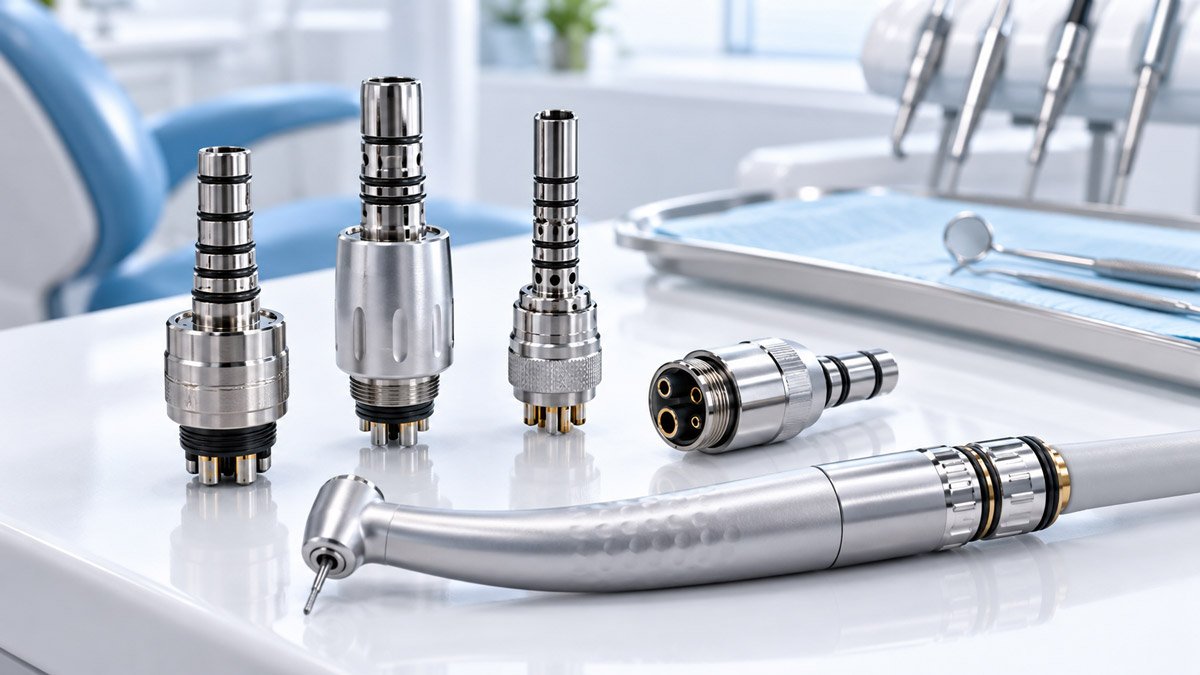
Choosing a dental handpiece is not only about power, head size or fibre optics. This guide explains common handpiece and coupler connections and how to make sure your new equipment is compatible with your dental unit.
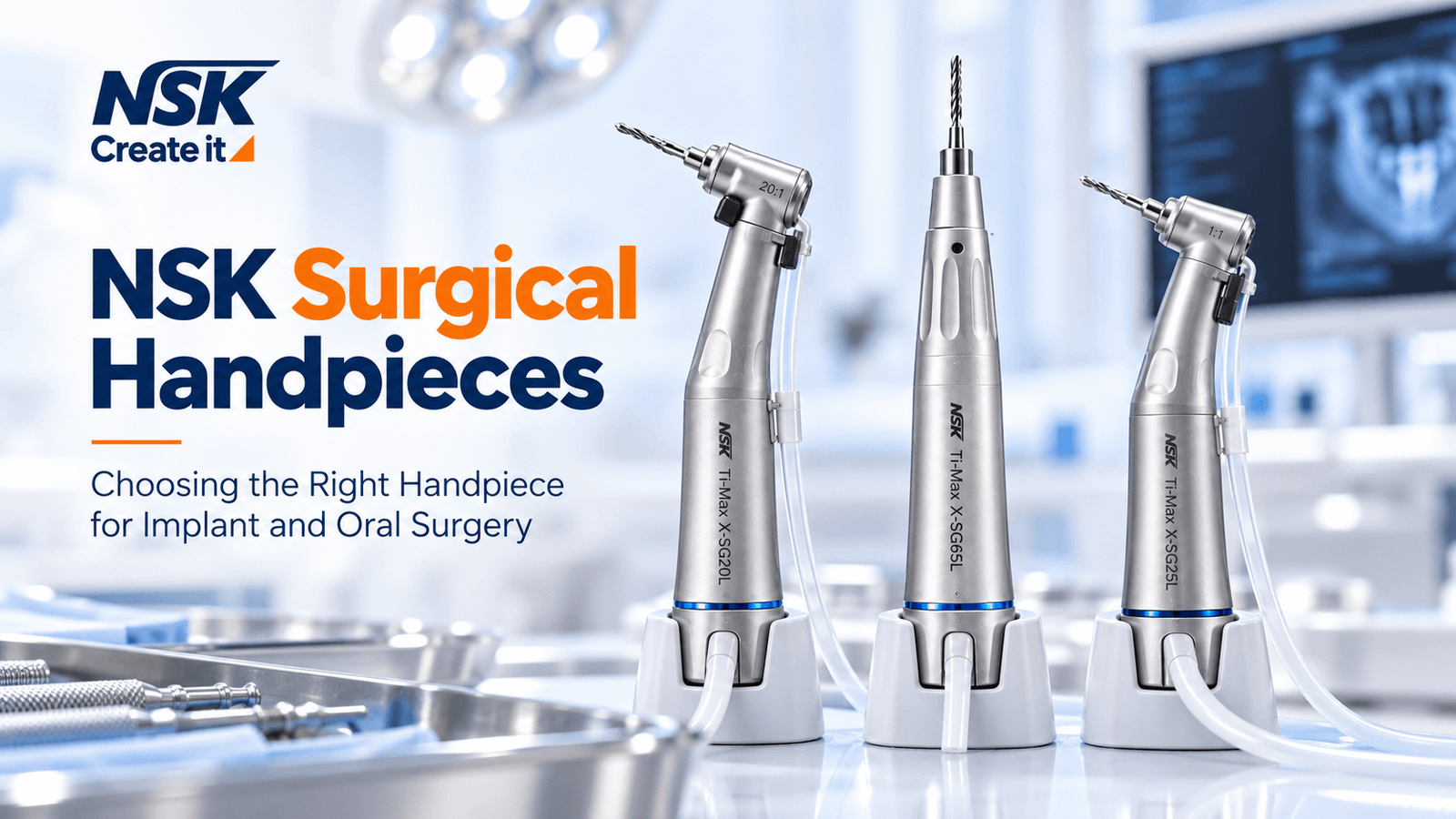
Choosing the right surgical handpiece depends on factors such as gear ratio, torque, irrigation, illumination and access. This guide explores NSK surgical handpieces for implant and oral surgery and explains what dentists should consider before choosing a system.
We use cookies to optimize our website and our service.
Functional
Always active
The technical storage or access is strictly necessary for the legitimate purpose of enabling the use of a specific service explicitly requested by the subscriber or user, or for the sole purpose of carrying out the transmission of a communication over an electronic communications network.
Preferences
The technical storage or access is necessary for the legitimate purpose of storing preferences that are not requested by the subscriber or user.
Statistics
The technical storage or access that is used exclusively for statistical purposes.The technical storage or access that is used exclusively for anonymous statistical purposes. Without a subpoena, voluntary compliance on the part of your Internet Service Provider, or additional records from a third party, information stored or retrieved for this purpose alone cannot usually be used to identify you.
Marketing
The technical storage or access is required to create user profiles to send advertising, or to track the user on a website or across several websites for similar marketing purposes.