How to Choose Dental Loupes in Ireland: A Complete Buyer’s Guide
A practical guide to magnification, working distance, loupe design, fit, and illumination
Choosing the right dental loupes can improve visibility, support clinical precision, and help you maintain a more comfortable working position. The best choice depends on your clinical work, preferred magnification, working distance, pupillary distance, frame style, and whether you need integrated illumination.
MF Dental supplies a range of Opticlar dental loupes and headlights for dental and medical professionals across Ireland. This guide explains the main points to consider before choosing a system.
Quick Guide to Choosing Dental Loupes
Requirement
General starting point
General dentistry, hygiene, or first-time users
Often 2.5x or 3.0x magnification
More detailed restorative or specialist work
Consider higher magnification where appropriate
Lightweight daily-use system
TTL loupes
Greater posture support and adjustable setup
Prismatic heads-up loupes
These are general guidelines only. The most suitable setup depends on your procedures, working posture, visual preference, and the specifications of the loupe system.
What Are Dental Loupes?
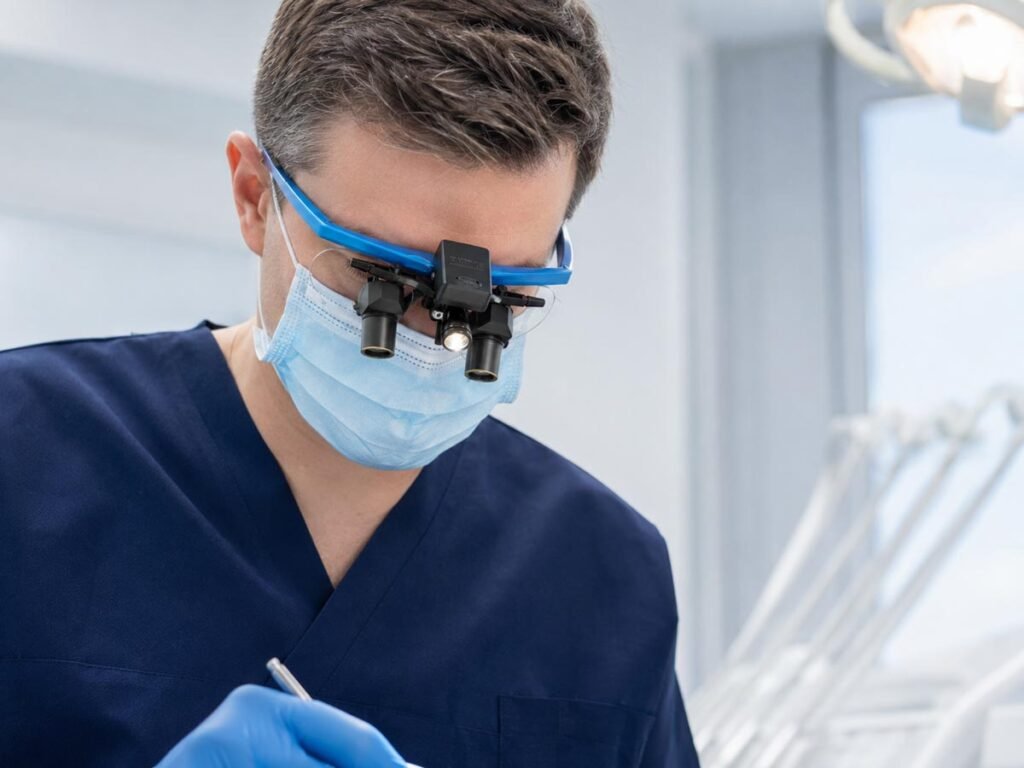
Dental loupes are magnifying optical devices worn on a frame or headband. They enlarge the working field so clinicians can see fine detail more clearly while carrying out procedures.
They are commonly used in:
General dentistry and dental hygiene
Restorative dentistry and prosthodontics
Endodontics and oral surgery
Orthodontics
Medical, veterinary, and other precision-based clinical work
The correct loupes can improve visual access and support a more neutral working position. However, it is important to select the appropriate magnification, working distance and pupillary distance from the available options.
Why Use Dental Loupes?
Dental loupes can provide both visual and ergonomic benefits. Depending on the system and the user’s working setup, these may include:
Improved visibility of fine clinical detail
Greater precision and control
A clearer view of the treatment area
Support for a more upright working posture
Reduced need to lean closely over the patient
Less visual fatigue during longer procedures
Improved confidence when working in areas with limited visibility
Loupes should not be viewed as a guaranteed solution for neck or back discomfort. Their ergonomic benefit depends on correct working distance, declination angle, posture, and fit.
Choosing the Right Type of Dental Loupes
Through-the-Lens (TTL) Loupes
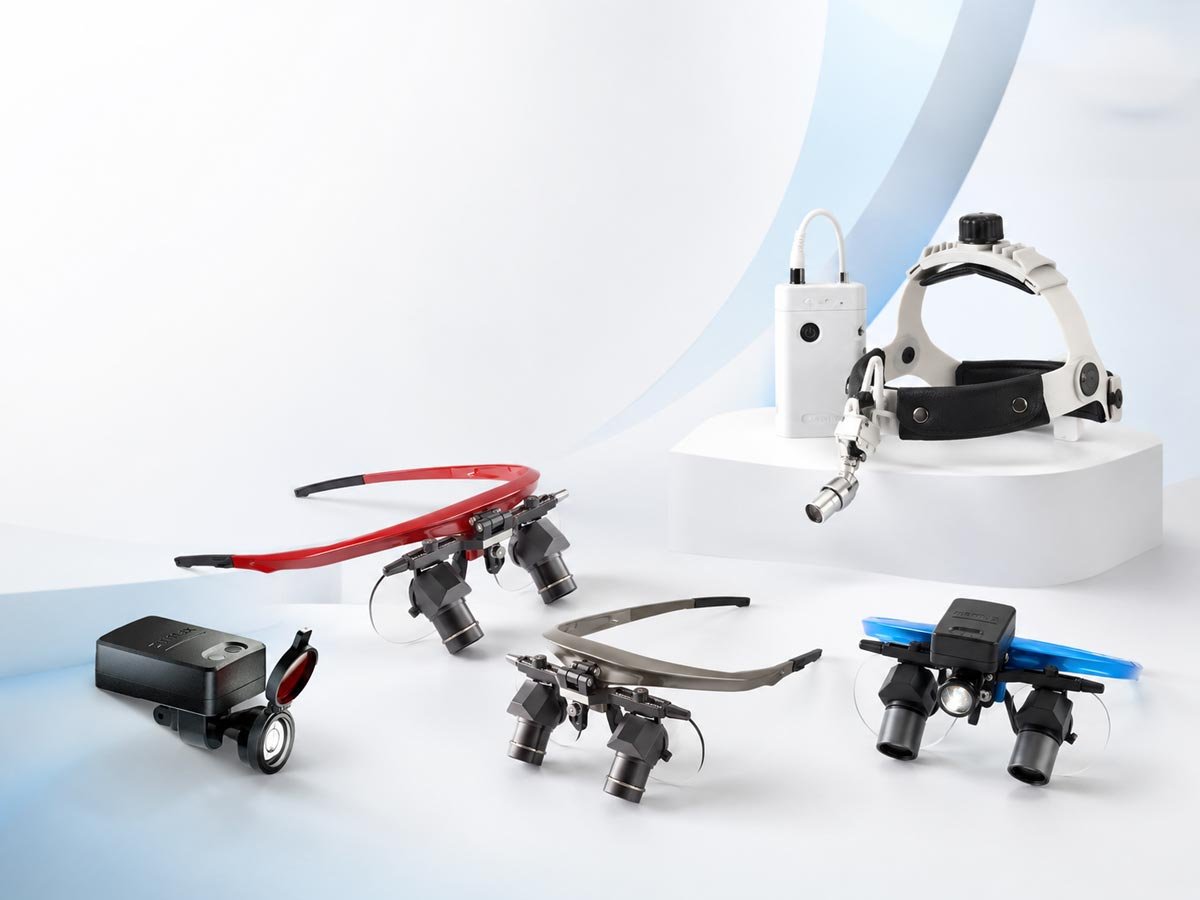
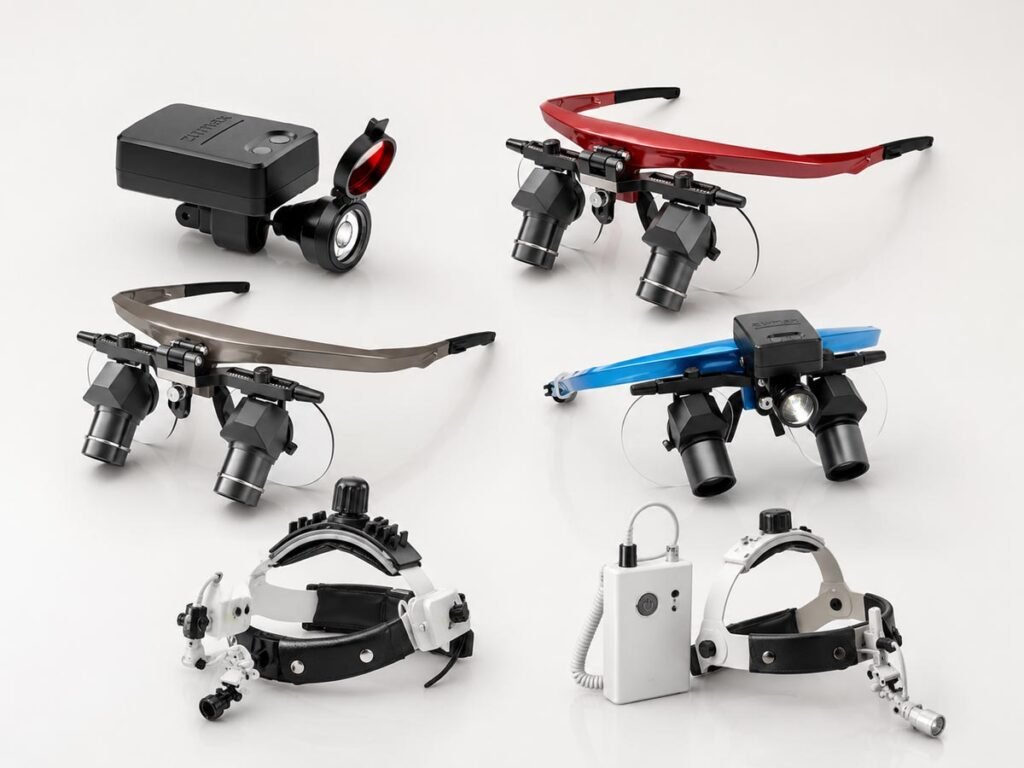
TTL loupes have the optical barrels mounted directly through the lenses. This creates a compact and lightweight system with a fixed optical position.
Typical advantages include:
Lightweight design for regular daily use
Stable optical alignment
Minimal adjustment once the correct configuration is selected
A wide field of view at lower magnifications
A simple setup for clinicians moving into magnification
The Opticlar TTL Easi-Loupes – Standard Declination Version available from MF Dental offer 2.5x or 3.0x magnification. They are available with working distances of 340, 420, 460, or 500 mm and standard PD options of 59, 61, or 63 mm, with other PD options available on request.
The optics use a standard 25-degree declination angle and are available on sports or titanium frames. Because these settings are selected from available configurations, it is important to measure working distance and pupillary distance carefully before ordering.
Prismatic Heads-Up Loupes
Prismatic heads-up loupes use a more advanced optical arrangement designed to combine higher magnification with a more upright viewing position. They are particularly useful for clinicians who need greater detail or who want more adjustment than a fixed TTL system provides.
Typical advantages include:
Higher magnification options
Adjustable pupillary and working distance
Integrated declination geometry to support a neutral neck position
A clear field of view for precision procedures
Flip-up optics for switching between magnified and normal vision
The Opticlar DFK Prismatic Heads-Up Binocular Loupes offer 3.0x, 4.0x, or 5.0x magnification, an adjustable working distance of 400-550 mm, and continuous pupillary distance adjustment from 46-82 mm.
Their inbuilt 25-degree angle of declination is designed to align the user’s line of sight while supporting a more neutral neck position. The optics can also be flipped up when magnification is not required.
Choosing the Correct Magnification
Higher magnification is not automatically better. As magnification increases, the field of view and depth of field generally become smaller, and positioning becomes more exacting. The right choice should balance the detail you need with ease of use.
2.5x Magnification
Often a suitable starting point for general dentistry, hygiene, students, and first-time loupe users. It normally provides a relatively wide field of view and is easier to adapt to.
3.0x to 3.5x Magnification
Provides more detail while still offering a practical field of view for many clinical procedures. This range may suit experienced users or clinicians carrying out restorative, prosthodontic, or more detailed general work.
4.0x Magnification and Above
Higher magnification may be appropriate for endodontics, microsurgical work, and other procedures where fine detail is essential. It normally requires more precise positioning and may take longer to adapt to.
Understanding Working Distance
Working distance is the distance between your eyes and the treatment area when you are seated or standing in your normal clinical posture. It is one of the most important measurements when choosing loupes.
If the working distance is too short or too long, you may compensate by leaning forward, raising your shoulders, or moving away from your natural working position. A suitable working distance allows the image to remain clear while you maintain a comfortable posture.
Understanding Pupillary Distance (PD)
Pupillary distance is the distance between the centres of the pupils. Correct optical alignment helps the two magnified images merge into one clear binocular image.
Accurate PD selection can help provide:
Clear binocular vision
Correct optical alignment
Improved depth perception
Reduced visual strain
Opticlar TTL Easi-Loupes use selected PD configurations. The DFK heads-up system provides continuous PD adjustment, which may be useful for clinicians who want greater flexibility.
Choosing the Right Frame
Frame comfort and stability matter because loupes may be worn for long periods. The right frame should remain secure without creating unnecessary pressure around the nose, ears, or temples.
Points to consider include:
Overall weight
Sports, titanium, or headband design
Stability during movement
Compatibility with prescription correction
Ease of cleaning and adjustment
The best option is the one that supports stable optical alignment and remains comfortable throughout your normal working day.
Why Add a Loupe Light?
A loupe light directs illumination along the clinician’s line of sight. This can reduce shadows and improve visibility in deep or restricted treatment areas.
Potential benefits include:
Focused illumination of the working field
Improved visibility in deeper areas
Reduced shadows caused by overhead lighting
Greater detail when working at higher magnification
Before choosing a loupe system, consider the type of procedures you perform, the level of detail required, your working posture, and how frequently the loupes will be used.
Your decision should take account of:
Clinical specialty and procedure type
Preferred magnification
Working distance
Pupillary distance
Field of view and depth of field
Declination angle and posture
Frame style and weight
Prescription requirements
Whether integrated or separate illumination is needed
For many first-time users, a lower magnification TTL system may provide the easiest transition. Clinicians seeking higher magnification, more adjustment, or stronger posture support may prefer a prismatic heads-up system.
Frequently Asked Questions About Dental Loupes
Are dental loupes worth the investment?
For clinicians who regularly perform detailed procedures, dental loupes can provide meaningful benefits in visibility, precision, and working posture. Their value depends on selecting a system that suits the user and the work being performed.
What magnification should I choose?
Many general dentistry and hygiene users begin with 2.5x or 3.0x magnification. Higher magnification may suit specialist or precision work, but it also reduces the field and depth of view. The correct choice is individual rather than universal.
What is the difference between TTL and heads-up loupes?
TTL loupes have optics mounted through the lenses in a fixed position and are usually compact and lightweight. Prismatic heads-up loupes provide more adjustment, higher magnification options, and optical geometry designed to support a more upright viewing position.
Can dental loupes help with neck and shoulder strain?
Correctly selected loupes can support a more neutral posture and may help reduce the need to lean forward. They are not a guaranteed treatment for existing discomfort, and the benefit depends on correct measurements, setup, and working habits.
Are dental loupes suitable for beginners?
Yes. Lower-magnification systems with a wider field of view are often easier for first-time users to adapt to. It is important to allow time to become comfortable with the magnified working field.
Whether you are purchasing your first pair or upgrading your current equipment, the right choice should be based on your clinical work, measurements, posture, and preferred level of magnification.
For help selecting a suitable system, contact MF Dental to discuss your requirements.
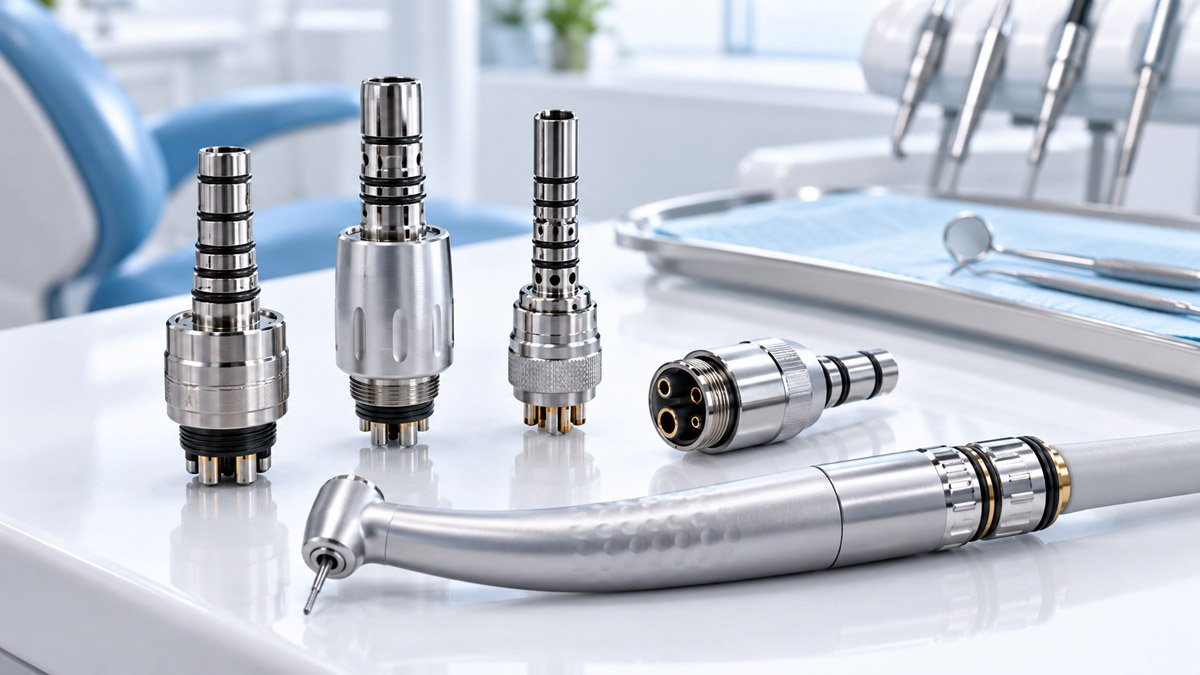
Choosing a dental handpiece is not only about power, head size or fibre optics. This guide explains common handpiece and coupler connections and how to make sure your new equipment is compatible with your dental unit.
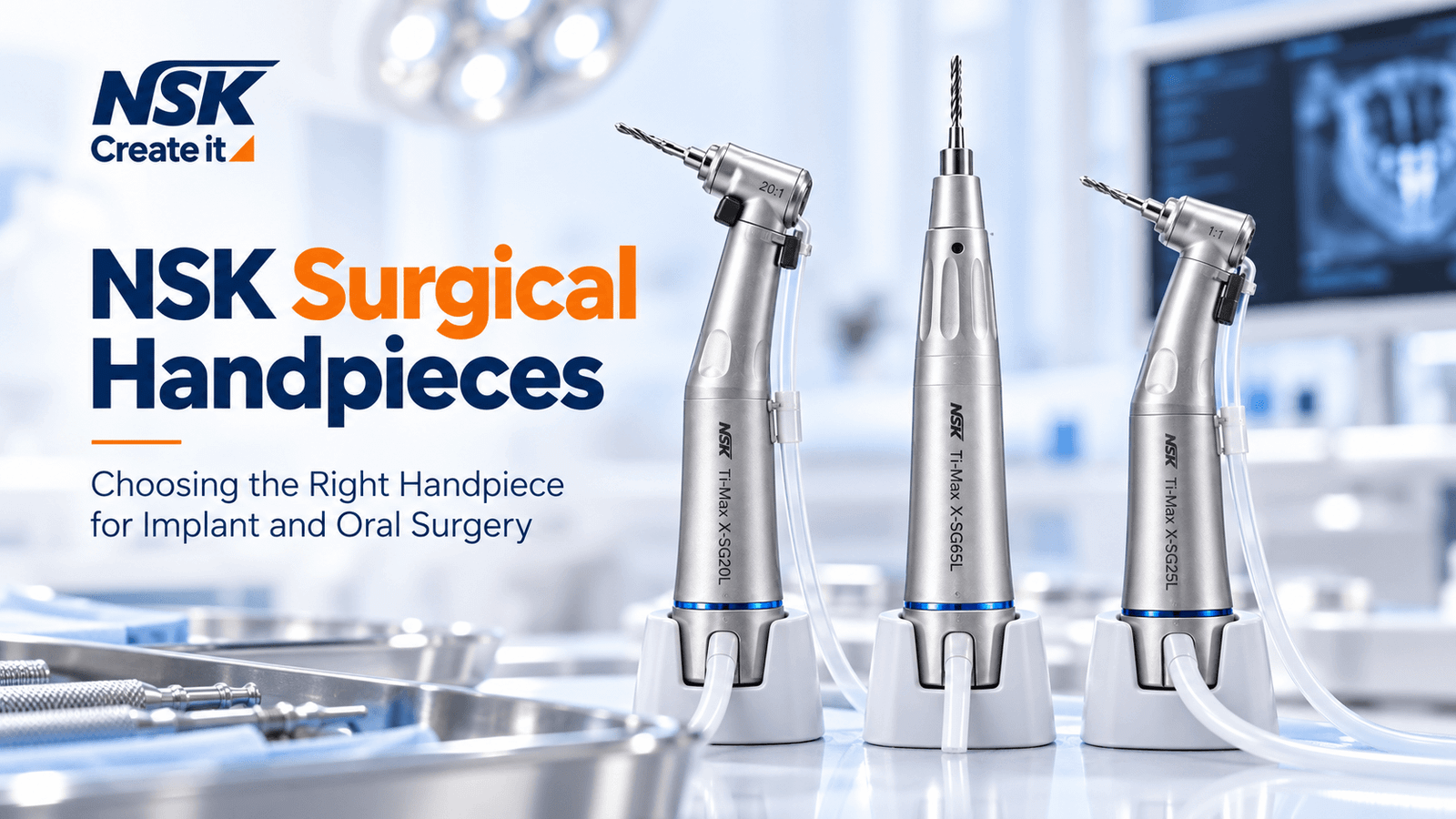
Choosing the right surgical handpiece depends on factors such as gear ratio, torque, irrigation, illumination and access. This guide explores NSK surgical handpieces for implant and oral surgery and explains what dentists should consider before choosing a system.
We use cookies to optimize our website and our service.
Functional
Always active
The technical storage or access is strictly necessary for the legitimate purpose of enabling the use of a specific service explicitly requested by the subscriber or user, or for the sole purpose of carrying out the transmission of a communication over an electronic communications network.
Preferences
The technical storage or access is necessary for the legitimate purpose of storing preferences that are not requested by the subscriber or user.
Statistics
The technical storage or access that is used exclusively for statistical purposes.The technical storage or access that is used exclusively for anonymous statistical purposes. Without a subpoena, voluntary compliance on the part of your Internet Service Provider, or additional records from a third party, information stored or retrieved for this purpose alone cannot usually be used to identify you.
Marketing
The technical storage or access is required to create user profiles to send advertising, or to track the user on a website or across several websites for similar marketing purposes.